
When most people think about solar energy Zambia, they picture panels on rooftops and reduced electricity bills. That’s part of the story. But it’s not the whole story.
The real impact of solar investment in Zambia goes far deeper. It touches every corner of our economy. It creates opportunities where none existed. It builds industries from the ground up.
This is about economic transformation, not just energy transformation.
The Multiplier Effect: One Investment, Many Benefits
Every kwacha invested in solar generates returns across multiple sectors. Economists call this the multiplier effect.
Here’s how it works in practice:
Manufacturing and Supply Chains
The Zambia solar industry growth requires equipment. Panels, inverters, mounting systems, cables, batteries, monitoring devices.
Initially, these components come from international suppliers. But as the industry matures, local manufacturing opportunities emerge. Assembly plants. Component production. Quality testing facilities.
Local manufacturing means:
- Jobs for Zambian workers
- Skills transfer and training
- Reduced import dependence
- Lower project costs over time
- Technology expertise that stays in Zambia
This is already happening. As renewable energy investment Zambia scales up, more companies are establishing local operations.
Construction and Installation
Every solar project needs skilled hands. Electricians. Engineers. Construction workers. Project managers. Safety officers.
These aren’t temporary gigs. They’re career-building opportunities. A single large-scale solar installation can employ dozens of workers for months. Rooftop installations create steady work for specialized teams.
The solar energy Zambia sector is creating a new class of skilled professionals. Young Zambians are training as solar technicians, gaining certifications and building expertise in cutting-edge technology.
Transportation and Logistics
Moving equipment from ports to project sites requires sophisticated logistics. Trucking companies. Warehouse operators. Customs brokers. Freight coordinators.
Solar projects create business for Zambia’s transportation sector. Routes are established. Relationships are built. Capacity expands.
This infrastructure serves solar today but benefits other industries tomorrow.
Job Creation: Beyond the Obvious
The employment impact of solar investment in Zambia extends beyond installation crews.
Direct Jobs
These are the visible positions:
- Solar panel installers
- Electrical engineers
- System designers
- Project managers
- Quality control specialists
- Maintenance technicians
Indirect Jobs
These emerge in supporting industries:
- Manufacturing workers producing solar components
- Sales teams marketing solar solutions
- Financial professionals structuring solar investments
- Legal experts handling contracts and regulations
- Training instructors teaching solar technology
Induced Jobs
These appear in the broader economy:
- Retail workers serving newly employed solar professionals
- Restaurant owners feeding construction crews
- Property developers building near solar facilities
- Service providers catering to growing communities
One solar project creates dozens of direct jobs and hundreds of indirect opportunities.
Industrial Competitiveness: The Business Advantage
Here’s where renewable energy investment Zambia gets really interesting for the national economy.
Lower Operating Costs
Businesses with solar installations slash energy expenses by 50-70%. Those savings don’t vanish. They get reinvested.
A factory spending less on electricity can:
- Lower product prices
- Increase profit margins
- Expand operations
- Hire additional workers
- Invest in new equipment
Suddenly, Zambian manufacturers compete more effectively with regional rivals. Lower energy costs translate directly to competitive advantage.
Reliable Production
Power outages cost the Zambian economy millions annually. Production stops. Materials spoil. Deadlines are missed. Contracts are lost.
Solar energy Zambia businesses enjoy provides reliability. Operations continue regardless of grid status. Production schedules hold. Customer commitments are met.
Reliability attracts investment. International companies looking for African manufacturing bases prioritize locations with stable power. Solar-powered Zambia becomes increasingly attractive.
Export Opportunities
Industries with reliable, affordable power can scale production for export markets. Zambian goods become more competitive internationally.
Agricultural processing. Light manufacturing. Assembly operations. All these sectors benefit from solar-powered cost advantages.
Attracting Foreign Investment
International investors notice Zambia solar industry growth. They see:
- Abundant solar resources
- Supportive government policies
- Established project developers like Solufy
- Proven track record of successful installations
- Growing local expertise
Foreign capital flows into solar projects. This brings:
- Development expertise
- Technology transfer
- Job creation
- Infrastructure improvement
- Economic diversification
Renewable energy investment Zambia attracts signals to global markets that the country is serious about sustainable development. This reputation attracts investment beyond just energy.
Rural Development and Energy Access
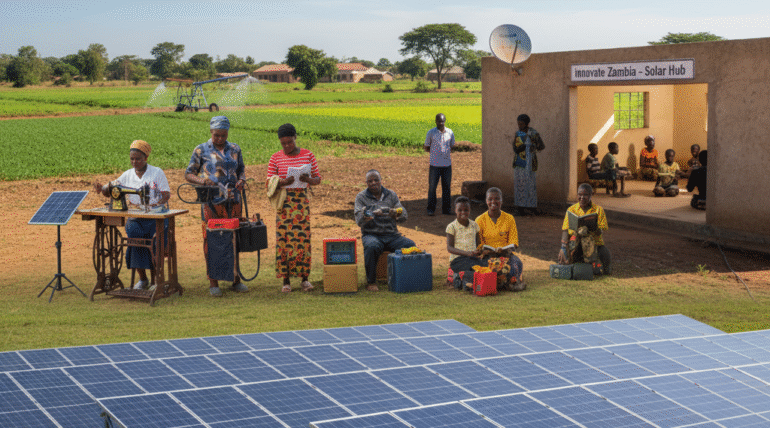
Solar investment in Zambia isn’t confined to urban centers. Rural areas benefit enormously.
Agricultural Transformation
Solar-powered irrigation systems extend growing seasons. Food processing facilities run reliably. Cold storage preserves produce. Farmers access better markets.
Rural agricultural productivity increases. Food security improves. Rural incomes rise.
Healthcare and Education
Solar powers rural clinics and schools. Vaccines stay refrigerated. Medical equipment functions reliably. Students study after dark. Digital learning becomes possible.
Better healthcare and education create healthier, more skilled populations. This human capital development drives long-term economic growth.
Small Business Development
Rural entrepreneurs establish solar-powered businesses. Welding shops. Carpentry workshops. Tailoring operations. Phone charging stations. Cold drink vendors.
Energy access unlocks rural economic potential previously constrained by lack of electricity.
Financial Sector Development
The Zambia solar industry growth stimulates financial innovation.
New Financial Products
Banks develop solar-specific loan products. Leasing companies offer equipment financing. Investment funds focus on renewable projects.
These financial innovations serve solar today but expand to other sectors tomorrow. The expertise, systems and relationships built around solar financing benefit the entire economy.
Risk Management
Solar projects help financial institutions understand infrastructure financing. They develop risk assessment models. They build expertise in project finance.
This knowledge base strengthens Zambia’s financial sector overall.
Skills and Education: Building Human Capital
Perhaps the most valuable long-term benefit of solar energy Zambia development is skills creation.
Technical Training
Technical colleges add solar programs. Universities develop renewable energy courses. Vocational schools train installers and technicians.
These educational programs create capabilities that serve Zambia for decades.
Engineering Excellence
Young Zambian engineers gain experience designing and implementing sophisticated solar projects. This expertise positions Zambia as a regional renewable energy hub.
Zambians trained here can lead projects across Africa. Some return home with international experience. Others stay and build Zambia’s industry.
Environmental Benefits with Economic Value
Solar investment in Zambia creates environmental improvements with real economic worth.
Healthcare Cost Savings
Cleaner air from reduced fossil fuel use means fewer respiratory illnesses. Lower healthcare costs free resources for productive uses.
Agricultural Benefits
Climate-friendly energy reduces Zambia’s contribution to climate change. This protects the agricultural sector that employs most Zambians.
Tourism Appeal
Zambia’s commitment to clean energy enhances its eco-tourism reputation. Visitors value sustainable destinations. Tourism revenues increase.
The Road Ahead: Scaling Success
Current renewable energy investment Zambia represents just the beginning. The potential is enormous.
As costs continue falling and technology improves, solar becomes increasingly attractive. More businesses invest. More jobs are created. More economic benefits multiply.
Companies like Solufy, with their comprehensive approach and strong financial backing, are positioned to accelerate this growth. Their projects today build the foundation for tomorrow’s solar-powered economy.
The Bottom Line
Solar investment in Zambia is fundamentally about economic development. Yes, it provides electricity. But more importantly, it provides:
- Employment across skill levels
- Industrial competitiveness
- Rural development
- Foreign investment attraction
- Skills and education
- Financial sector innovation
- Environmental protection with economic value
Every solar panel installed is a building block in Zambia’s economic future.
The question for businesses and policymakers isn’t whether to invest in solar. It’s how quickly can we scale this investment to maximize economic benefits.
The Zambia solar industry growth is creating opportunities today that will compound into prosperity tomorrow.
Ready to be part of Zambia’s economic transformation? Contact Solufy Zambia and discover how solar investment can drive growth for your business and community.